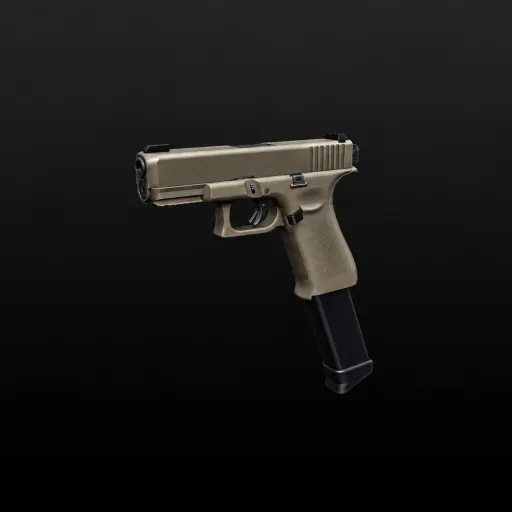
What wall penetration means in Realistic Home Defense, which cover still works, and the defender and invader sequences that survive a three-minute round.
Realistic Home Defense Wall Penetration: What Stops a Bullet
In the [NVG's] alpha, bullets go through thin walls. The game says it in one line: "Realistic guns that shoot through thin walls." That single rule changes what cover means, because the wall you are hiding behind may be hiding you rather than stopping the round.
The IBA Community version advertises realistic weapon mechanics but does not state a penetration rule. Treat penetration as confirmed in the alpha and unconfirmed in the IBA version until you test it on a range or a private server.
Official source: [NVG's] Realistic Home Defense [ALPHA] on Roblox — the "shoot through thin walls" line in the game description, checked October 29, 2026.
What the game actually says
The alpha's description is four paragraphs and three of them are rules:
- Defenders hold the house, invaders break in.
- One life, three minutes, last team standing.
- Realistic guns that shoot through thin walls.
- Cash every round for rifles, silencers and grenades.
- Up to 8v8 on Maple Street.
- A shooting range between rounds, and bots while you wait.
That is enough to build a tactic on, and not enough to build a table on. The game does not publish which wall materials stop a bullet, how much damage survives a wall, or whether penetration depends on the weapon. Any guide quoting penetration percentages for this game is making them up.
What the line does tell you is the design intent: the map is meant to punish players who treat drywall as armor.
Cover versus concealment
The distinction is old and it is the whole page.
Cover stops the bullet. In a game with penetration, that means thick exterior walls, structural corners, vehicles, and anything the developer modeled as solid. Concealment stops the eye. That means interior partitions, doors, furniture, and the corner you are currently crouched behind.
Most players treat both as cover. Then they die to a shot that came through the wall they were leaning on, and conclude the game is unfair.
The practical rule for the alpha: put mass between you and the likely line, not just a surface. An exterior wall with a street behind it is mass. An interior partition with a bedroom behind it is a curtain.
Penetration cuts both ways. A defender who leans on an interior wall to hold a corridor is also standing behind a surface that does not stop the rifle aimed at that corridor. If you can shoot through it, so can the person outside.
The defender's checklist
You have three minutes and one life. Spend the first thirty seconds on geometry, not on your gun.
Pick a room with one dominant entrance. Two doors means two angles, and with one life you cannot hold two angles alone. If the house forces a second door, block it, watch it, or accept that it is where you will die.
Stand off the wall, not on it. A step back from the interior partition gives you the same view of the door and puts the partition between you and the street instead of between you and nothing.
Aim at the doorway's far edge. Players enter on the near side of a frame because it is the shortest path. Pre-aim the near edge, then shift to the far edge on the first sound.
Use sound as a warning system. Footsteps, a reload, a grenade pin. In a game where a bullet can cross a wall, sound is the only sense that reaches through it.
Do not hold the same angle twice. One life means the invader learns nothing from killing you, but the second defender in the room learns everything from watching where you died.
The invader's entry sequence
Attackers have the clock on their side only if they use it. Three minutes is short, and a team that stacks outside one door for ninety seconds has already lost.
Split the approach, not the team. Two players at the front door and two at the back is worth more than four at the front, even if the back pair only makes noise. The threat of a second entry pulls defenders off the first.
Pre-fire the thin wall, not the door. If the defender is holding the doorway, the doorway is the worst place to shoot. A rifle round through the partition beside the frame reaches the same room without crossing the fatal angle.
Grenade the corner you cannot win. This is why Double Utilities is a real pass and not a joke item: two grenades are two chances to make a defender move before you commit. The game passes page covers what it costs and what it adds.
Enter on the far side of the frame. The near side is where the defender's crosshair already sits. The far side costs you a step and buys you the half-second the defender needs to re-aim.
Leave one player on the entry. Not to fight, to call. A team with no one watching the door it came through gets shot in the back by the defender who rotated.
Silencers and information
The alpha sells silencers for round cash, and penetration is the reason they are worth the money.
Every shot carries two pieces of information: the sound, which tells defenders where you are, and the line, which tells them where the bullet went. Suppression removes part of the first and none of the second. That is still a large advantage, because the defender who heard you can pre-aim the wall; the defender who did not hear you has to find you first.
The same logic makes a suppressor less useful in a straight fight and more useful on entry. If you are shooting through a wall at a defender who already knows where you are, the silencer does nothing. If you are the first player through a door, it is the difference between a room that turns toward you and a room that does not.
What this means in the IBA version
The IBA version's description lists tactical movement, lean, prone and fire modes, but no penetration line. Its thumbnail is a hallway with a flashlight, which is a strong hint about intended combat distance and no hint at all about wall materials.
Test it before you build a tactic on it. Load a private server, stand behind an interior wall, and fire at a wall you know an opponent is behind. If the round passes, the alpha's geometry lessons transfer; if it does not, the IBA version is a holding-angle game and the section above about defenders still applies. The IBA Community version is the one to test, since its page does not answer the question.
The controls page covers the lean and prone binds you need for either case, and the money guide explains why the silencer is the first purchase in the alpha's economy.
FAQ
Do bullets go through walls in Realistic Home Defense? Yes in the [NVG's] alpha, which states it in its description. The IBA version does not publish a penetration rule, so test it there.
Which walls stop a bullet? The game does not publish a material table. Exterior walls and structural corners are the safest assumption; interior partitions are not.
Does a silencer stop penetration? No. A suppressor changes sound, not ballistics. The round still crosses the wall.
What is the best defensive position? A room with one dominant entrance, a step back from the interior wall, with the doorway's near edge pre-aimed. Two entrances with one life is a coin flip.
Should invaders pre-fire walls? Yes, when the defender is holding a doorway. Firing through the partition beside the frame reaches the room without crossing the angle the defender is watching.
Is wall shooting bannable? No. It is a designed mechanic, stated in the game's own description. Exploits and scripts are a different matter and risk the account under the Roblox Community Standards.
Start from the Realistic Home Defense hub for the full guide set, or read the beginner guide to pick the version where these tactics apply.