German Moped Days Tuning Guide: Jlows Werkstatt
How Jlows Tuning-Werkstatt in Patriching works, why orders take one to twenty minutes, and which pass actually removes the wait.
Tuning in German Moped Days is not a menu. It is a workshop in Patriching called Jlows Tuning-Werkstatt, and the developer's own store describes the wait as one to twenty minutes depending on the order. That single detail explains most of the frustration new players have with the tuning system: they order a part, expect it in their hands, and discover they have booked their moped into a queue.
This page covers how the order-wait-install loop works, where the two delivery passes fit, and what to upgrade first on a stock Simson or Puch.
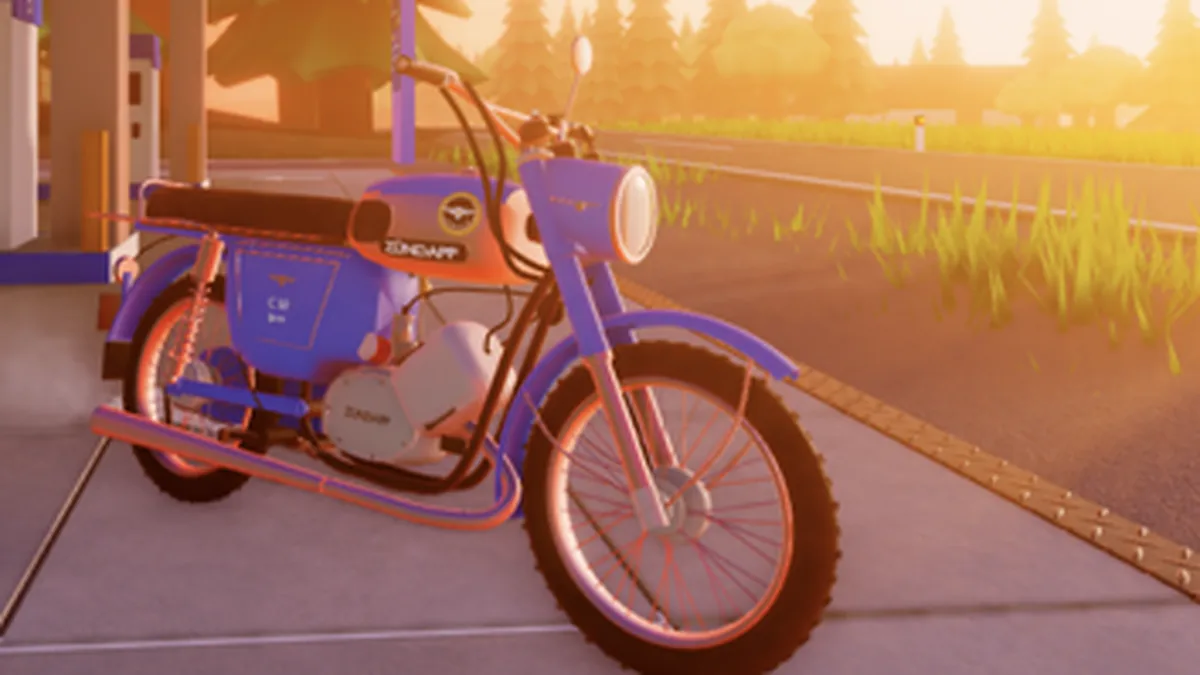
Official source: German Moped Days on Roblox — pass catalog names Jlows-Express and Cheap Tuning, checked October 29, 2026.
The workshop, the town, the wait
Patriching is the town name attached to the workshop in the store listing for Jlows-Express, a pass that skips the wait entirely. That is the only official mention of the location, and it is enough to establish three things:
- The workshop is a physical place you ride to, not a UI tab.
- Orders are queued, with a variable wait.
- The wait is long enough that the developer sells a way to skip it.
A one-to-twenty minute range is unusual design. Most games use a fixed timer or a premium instant option. A variable timer means the wait scales with the order, so a full engine build takes longer than a set of brake pads. Plan around the long end, not the short end.
How an order moves through the system
The store confirms two separate mechanics that are easy to confuse:
| Mechanic | What it covers | Pass that changes it |
|---|---|---|
| Workshop queue at Jlows | Fitting and tuning work, 1 to 20 minutes | Jlows-Express (skips it) |
| Delivery of ordered parts and mopeds | Parts and bikes arriving after purchase | Instant Deliveries (instant) |
That is two timers, not one. A part ordered from the shop has to arrive before the workshop can fit it, and the workshop then has its own queue. If you order a part and ride to Jlows expecting same-session fitting, you may be waiting twice.
The order that avoids the double wait:
- Order the part first, at the start of a session.
- Ride jobs while it is in transit.
- Take the moped to Jlows once the part is in your inventory.
- Start the workshop order at the end of a session, not the beginning, so the wait overlaps with you being offline.
A one-to-twenty minute wait is trivial when it runs while you are asleep and expensive when it runs while you are watching. Order at the end of a session, collect at the start of the next one.
The 1 to 20 minute wait, and what it is really for
A variable wait is a pacing tool. It stops a player from buying every upgrade in one sitting and turning a stock moped into a finished build in ten minutes. The developer wants the build to be a project you return to.
That is also why Cheap Tuning and Jlows-Express exist as separate passes:
- Cheap Tuning cuts the price of every part and tuning part by 35%.
- Jlows-Express cuts the time, skipping the workshop queue.
If you are patient and poor, buy neither and plan around the wait. If you are impatient, Jlows-Express is the one that changes how a session feels. If you are building a heavily tuned bike, 35% off every part compounds across the whole build and usually beats a time saver.
What 35% off is actually worth
The pass is explicit: 35% off each part and tuning part. That is a discount on the parts you were going to buy anyway, so its value scales with how much you tune.
A rough way to judge it without published prices:
- One or two parts: the pass probably costs more than it saves.
- A full build on one bike: the discount starts to matter.
- A full build on several bikes: this is the pass's intended customer.
The catch is that the discount applies to parts, not to mopeds, fuel or fines. If your spending is mostly fuel, Cheap Tuning does nothing for you, and the fuel guide is the better read.
What to tune first
With no published stat table, the upgrade order has to come from how the game plays rather than from numbers. The safest sequence on a stock bike:
- Tyres and brakes. Every job is a delivery run, and a bike that stops and grips completes more runs than a bike that is fast in a straight line.
- Suspension. Village roads and field edges punish a stiff setup more than a slow engine.
- Exhaust and intake. The visible chrome exhaust is the part the art highlights, and on a real two-stroke it is the cheapest power gain.
- Engine internals. Expensive, slow to fit, and the last thing a beginner should touch.
- Cosmetics. Underglow, radio IDs and garage lighting are for after the bike works.
Two of those steps are guesses about the game's physics, and the page says so. What is not a guess is the order of spending: functional parts before paint, always.
Do upgrades survive a resale?
Unknown, and it matters. The Verhandlungs Profi pass makes mopeds cheaper to buy and worth more to sell, which confirms resale exists and that the game prices a used moped differently from a new one. Whether a tuned bike sells for more because of the parts, or because of a generic condition multiplier, is not documented.
Until someone tests it, the conservative rule is: tune the bike you plan to keep, sell the bike you bought to flip, and do not assume a part adds its full price to a resale value. The mopeds page covers buying and slots.
A first build that does not waste euros
If you only do one tuning order in your first month, make it this one: tyres, brakes, suspension, exhaust, in that order, all fitted in a single workshop visit. It is unglamorous, it survives every patch, and it makes the job loop faster without changing how the bike behaves at the police stop.
What to skip: engine internals on a bike you do not ride daily, cosmetics before the functional parts, and any part you cannot afford to fit twice if the first attempt goes wrong. The money guide covers the pass maths if you are deciding whether Cheap Tuning pays for that order.
How tuning changes the money loop
Every euro spent at Jlows is a euro not spent on fuel, so tuning has to pay for itself. It does that in one of two ways:
- Faster routes. A quicker bike completes more jobs per session.
- Fewer failures. Better brakes and tyres mean fewer crashes, and fewer crashes mean fewer fines and repairs.
If a part does neither, it is a cosmetic with a performance price tag. The money guide ranks the passes by payback if you are deciding where the Robux goes.
FAQ
Where is Jlows Tuning-Werkstatt? In Patriching, according to the store listing for the Jlows-Express pass. It is a physical workshop in the game world, not a menu.
How long does tuning take? One to twenty minutes depending on the order, per the developer's own description. The Jlows-Express pass skips the wait.
What is the difference between Jlows-Express and Instant Deliveries? Jlows-Express skips the workshop queue. Instant Deliveries makes ordered parts and mopeds arrive immediately. They cover two different timers and can both be useful.
Is Cheap Tuning worth it? It cuts 35% off every part and tuning part, so it pays off on a full build and rarely on a single part. It does nothing for fuel, fines or moped purchases.
Can you tune a moped you plan to sell? You can, but it is unconfirmed whether the parts raise the sale price. Tune what you keep and flip what you bought to flip.
Is tuning required to progress? No. The base loop of jobs, fuel and garage space works on a stock bike. Tuning raises the ceiling, it does not unlock the game.
Finish with the police fines page if your tuned bike keeps attracting attention, or go back to the German Moped Days hub for the full set.